Short answer
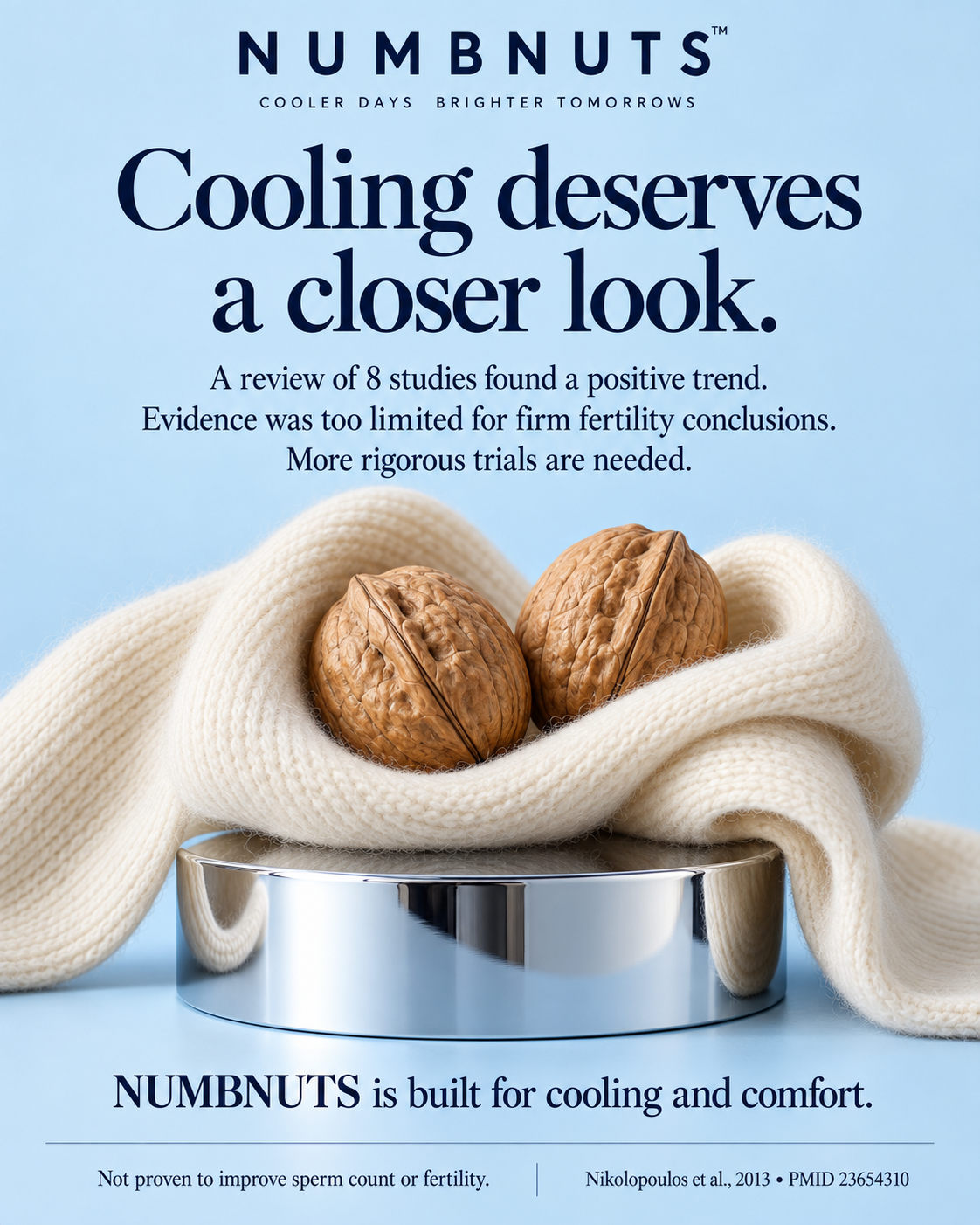
Icing your testicles has gone from locker-room rumour to something men post about. A famous biohacker swears by a bag of ice on the groin in the sauna, and the comment sections are full of bold claims in both directions. So here is the honest version, stripped of hype: what cooling is actually supported to do, what it is not, and how to do it safely if you decide to.
What is real
Heat is bad for sperm. This part is well established. Your testicles work best a few degrees below core body temperature, and sustained heat from saunas, hot tubs, long baths, a hot laptop, or tight insulating underwear is linked to lower sperm count and motility. The effect is usually temporary and reverses once the heat lets up.
Because of that, the flip side has been studied too. Keeping the testicles cool, or simply avoiding heat, is associated with better sperm measures, and trials on scrotal cooling have reported improvements in concentration, motility, and shape over several weeks. That is the real, defensible core: heat hurts sperm, and staying cool helps protect them. More on how sauna heat specifically affects sperm here.
What is hype: the testosterone claim
The single most repeated claim online is that icing your testicles boosts testosterone. The evidence does not support it. The best studies on scrotal cooling found no meaningful change in testosterone even when sperm measures improved, and some research suggests cold exposure can transiently lower it. If someone is selling you icing as a testosterone hack, treat it with suspicion. We will say it plainly: we make no testosterone claim.
What is hype: that it cures infertility
Cooling is not a treatment for infertility, and no honest brand should tell you otherwise. It is one controllable factor among many. If you have a genuine fertility concern, the right move is a proper semen analysis and a conversation with a doctor, not an ice pack and hope.
The fair objection: why not just avoid heat?
This is the strongest pushback, and it is a good one. If heat is the problem, the simplest answer is to use less of it. If you can happily skip the sauna and hot baths during the months that matter, do that. It is free and it works.
The reason cooling exists as a product category is that a lot of men either do not want to give up the sauna they love, or cannot avoid heat anyway: hot commutes, a desk and a laptop, a hot job, summer. For them, keeping cool is a way to enjoy the heat they choose while protecting the basics. Both approaches are legitimate. Pick the one you will actually stick to.
If you are going to cool, do it safely
This matters, because the DIY version has a real downside. A few rules:
- Never put anything frozen directly on skin. Ice and hard freezer packs can cause an ice burn.
- Aim for a comfortable cool, not frozen solid. Colder is not better.
- Keep it brief, and stop if you go numb or it hurts. Cooling should feel controlled.
- A fabric layer between any cold pack and your skin is non-negotiable.
This is exactly why we did not just sell a bag of gel. NUMBNUTS is a wearable liner with a phase-change insert tuned to a comfortable cool, a fabric layer built in, and an insulated case so it travels. The point is a cooling habit you will actually keep, done safely.
The bottom line
Real: heat lowers sperm, and staying cool helps protect them. Hype: that icing boosts testosterone or cures infertility. If you want to look after the basics and you would rather keep the heat you love, cooling is a sensible, low-effort way to do it, as long as you do it safely. If you are trying to conceive, it is one of the few things genuinely in your control.

